
Among the Christian holy sites in Jerusalem stands one that is sometimes forgotten. It certainly does not attract the barely negotiable lines encountered at the Church of the Holy Sepulchre. The structure I am speaking of is the Upper Room of the Last Supper, often referred to as the Cenacle or, in Latin, the Coenaculum (= “upper room”). While the second story commemorates Jesus’ last supper, the first floor venerates the tomb of King David whom Muslims also honor as nebi Da’ud, the prophet David.
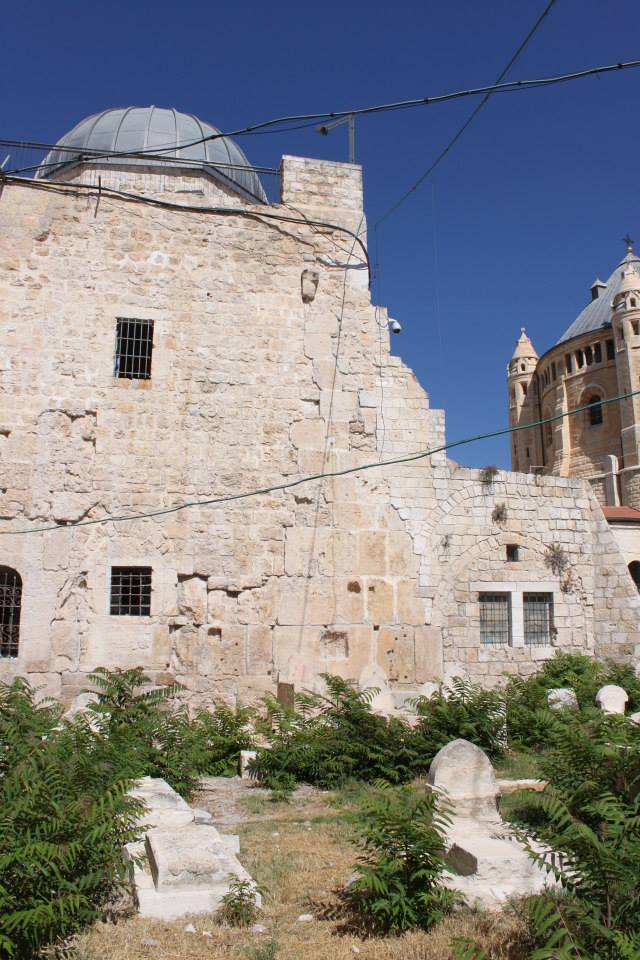
Though the structure has a very long history, a fact disputed by no one, there is disagreement over just exactly how old the oldest part of the building really is. There are essentially two competing theories. The minimalist interpretation is that the Cenacle was built in the fourth century at the same time, or even as part of, a basilica church called Hagia Sion, or “Holy Zion,” on the southern part of Mount Zion. A less conservative view suggests the Cenacle is much older than that. According to these scholars, its oldest architectural elements may have been laid by the first century BCE or CE. Which theory is true?
Historians, especially those specializing in the ancient world, can never be entirely certain of the truth. The evidence used to construct either theory of the Cenacle breaks down into three categories: contemporary or near-contemporary historical accounts; archaeology; and artistic representations. Each of these, in my view, supports the reasonable belief that the oldest part of the Cenacle stood during the lives of the first generation of Jewish followers of Jesus. It is even possible that the foundations, at least, go back to the time of Jesus himself.
I have written an entire book surveying the available evidence from all three categories discussed above. Here, it will only be possible to point out the most compelling clues that allow us to tentatively date this sacred site, today venerated by Christians, Jews, and Muslims.
1. The Gospels of Mark and Luke, as well as the Acts of the Apostles, attest to a location identified in Greek by Mark (and followed by Luke) as the anagaion or “upper room” (Mark 14:15; Luke 22:10-12). Luke has here adopted the word choice of Mark in connection with the location of Jesus’ last supper. But Luke’s own compositional preference (he wrote both the Gospel and Acts) is the Greek word huperōon (= “upper room”; Acts 1:13). It is reasonable to conclude that the author was referring to the same upper room as he gives no indication that the address has changed from the anagaion of the Last Supper to the huperōon of the apostles.
2. Outside the New Testament, there is no other contemporaneous account of this structure, not in the first, second, or probable third centuries. Not until the historical accounts of the fourth century do we find references to the construction of this “upper room” building. Tellingly, these notices are often tied to the story of those Jesus believing Jews who fled Jerusalem during the first Jewish Revolt (66-70 CE) but returned after the cessation of hostilities. Accounts are found in the writings of Eusebius (4th c.), Epiphanius (4th-5th c.), Alexander the Monk (6th c.), and Eutychius (10th c.).
Eusebius, who admitted to relying on earlier accounts, affirms the presence of a Jewish congregation of believers in Jerusalem until about 132-135 CE. Epiphanius wrote that a “church of God” stood on Mount Zion at that time. He says it was “small, where the disciples, when they had returned after the Savior had ascended from the Mount of Olives, went to the upper room, for there it had been built ….” He equates the upper room of Acts with the structure on Mount Zion standing in the early second century. Eutychius, admittedly late, sums up earlier testimonies and adds the important datum that the Jewish believers who returned to Jerusalem after the revolt “built a church.” He dates the construction of it to 73/74 CE.
None of these historians claims the “church” which stood in the early second century was the same building in which Jesus ate his last supper. Instead, they agree that it was used by the first generation of Jewish believers, whether they built it, rebuilt it, or co-opted it.
3. Archaeology is not much help in dating the Cenacle. There is clear evidence that the building was repaired numerous times. Its lowest course of stones represents the earliest structural phase of the building. When were the stones laid? There is disagreement among scholars. Some believe they are “Herodian” stones cut in the first century BCE or CE. Others claim, regardless of the age of the stones, that they were only assembled for this building in the fourth century. Some who hold this theory suppose the Cenacle to be the surviving southeast corner of Hagia Sion (see above).
This last assertion is easily refuted. In 1950 archaeologist Jacob Pinkerfeld dug an exploratory pit at the northeast corner of the Cenacle. He found a seam beginning at bedrock level and extending upward that would have divided the Cenacle from Hagia Sion. This demonstrates conclusively that the Cenacle was not the remaining southeast corner of Hagia Sion.
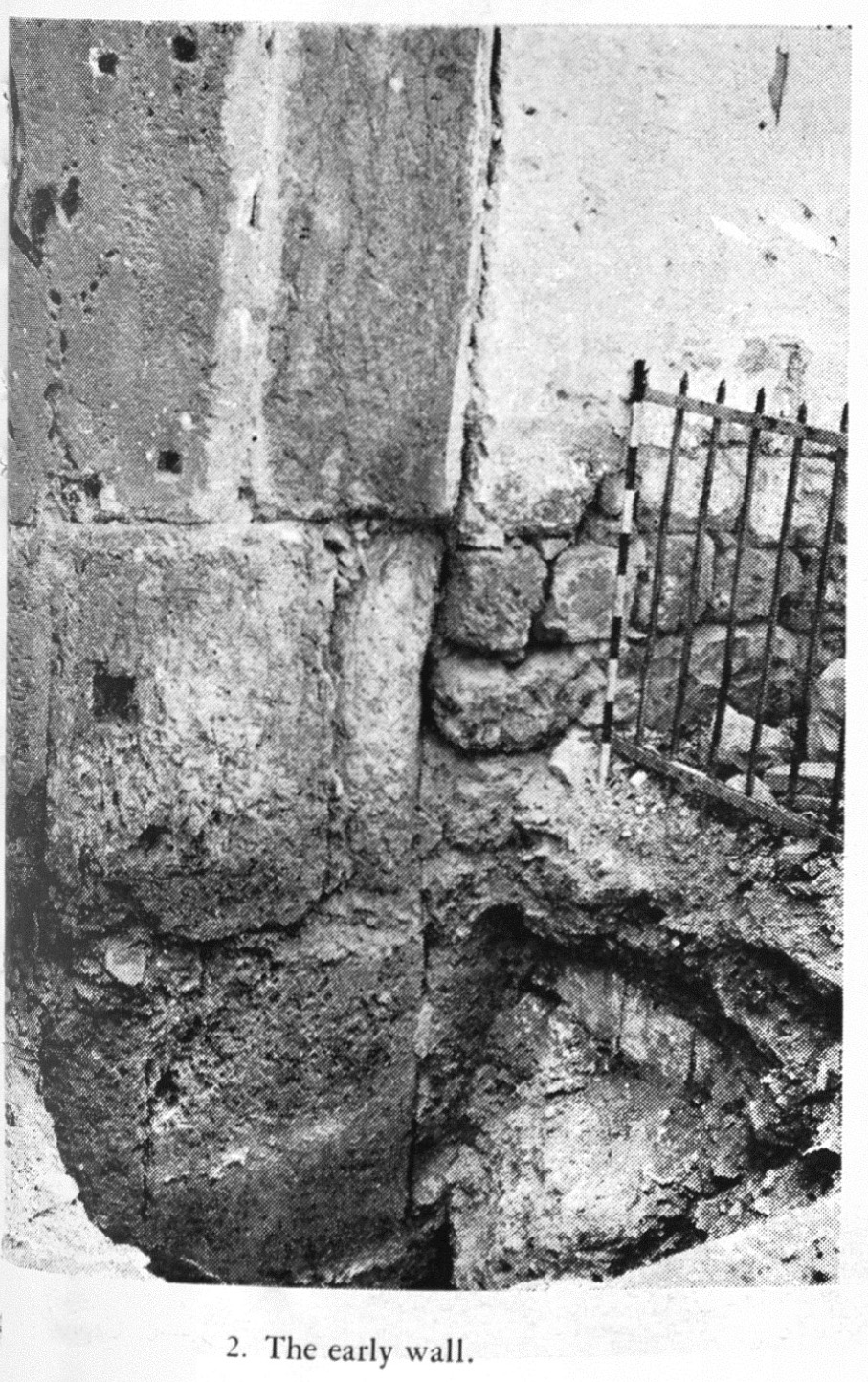
A fourth-century origin for the Cenacle therefore seems unlikely. Why would forth-century architects and builders design and construct two buildings simultaneously and adjacent one another without interconnecting them? Clearly one building preexisted the other. Additional evidence for this comes from other fourth-century accounts. The pilgrim Egeria (ca. 381 CE) wrote in her travel diary while in Jerusalem that the events of Pentecost took place on Mount Zion noting that there was “another church there now.” She was referring to the new Hagia Sion completed just before her arrival. It was the Emperor Theodosius (379-395 CE) who, according to an eighth-century lectionary, “developed, expanded, and honored” the Cenacle, “the mother of all churches, the one founded by the Apostles … in which the Holy Spirit at Pentecost came down.” A fourth-century liturgy echoes the tradition that the Cenacle was the “mother of all churches” in which the “Spirit … descended on [the] apostles in the form of tongues of fire in the upper room.”
There is another archaeological reality that is rarely commented on by supporters of the fourth-century origin of the Cenacle. The Cenacle was intermittently destroyed and repaired over the course of nearly two thousand years due to natural (e.g., earthquakes) and manmade (e.g., Christian pogroms) catastrophes, yet it was always repaired. No one bothered to repair Hagia Sion once it fell to the Persians in 614 CE. If the Cenacle was only a corner of the fourth-century basilica, why did Christians only choose to rebuild this corner and not the entire church? The same question could be asked centuries later when the Crusaders found the Cenacle in disrepair. They fixed it up and built a larger church around it called the Church of St. Mary. It fell once Muslims regained control of Jerusalem. It, too, was never rebuilt. But the Cenacle was. Why this history of maintaining the Cenacle if it was not originally a standalone building predating the fourth century?
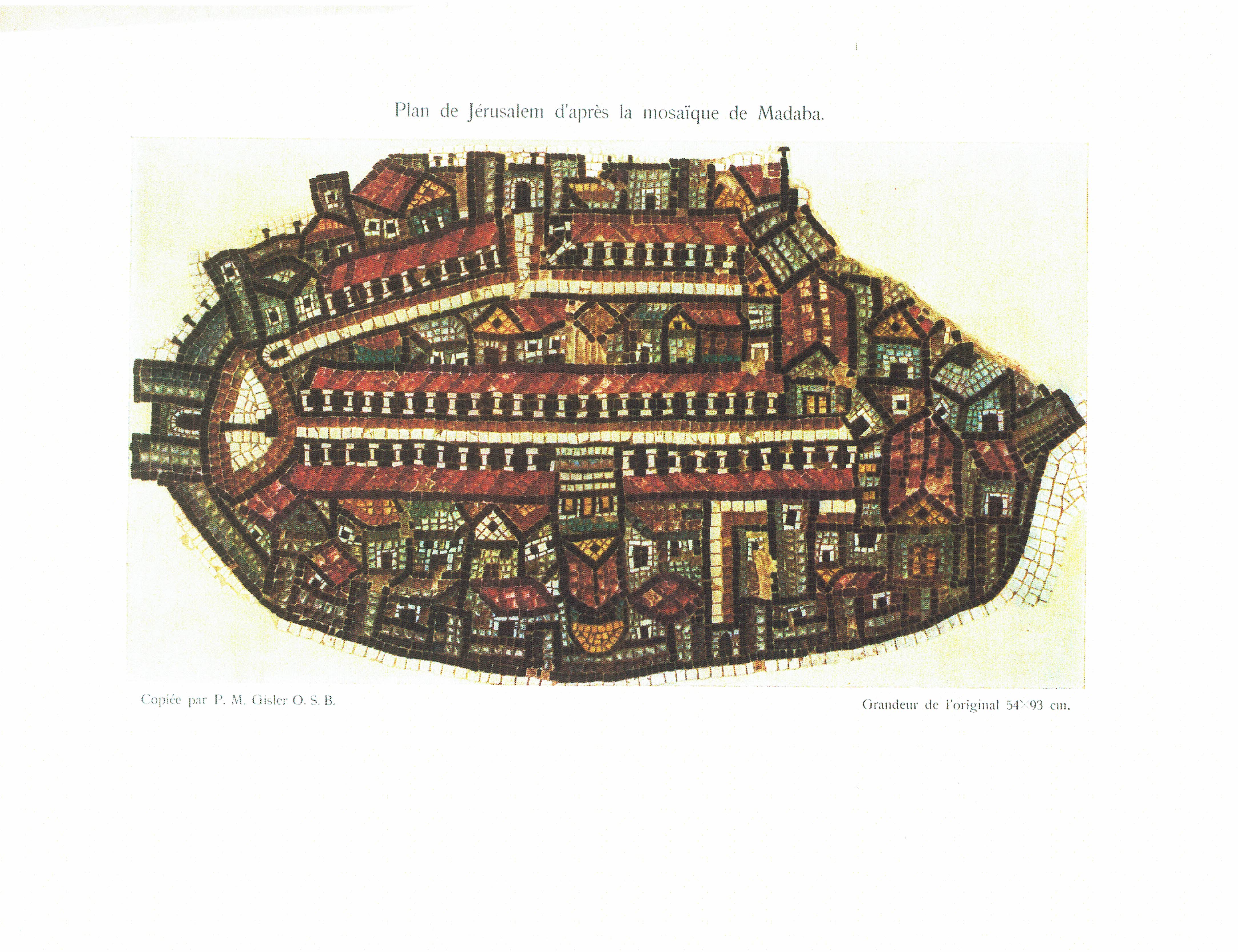
4. The separate nature of the Cenacle and Hagia Sion is confirmed by a sixth-century floor mosaic of Jerusalem appearing in the church of St. George in Madaba, Jordan. This artistic depiction shows the Cenacle as adjacent to, and considered separate from, Hagia Sion. Historians struggling with this representation argue that Hagia Sion must have featured a southern wing (with no corresponding northern wing as would normally be the case resulting in the typical cruciform floorplan).
The evidence is stronger in support of the Cenacle as an early structure at least as early as the first generation of apostles. Fourth-century writers who knew of the construction of Hagia Sion also knew of the Cenacle’s prehistory. They date it to the first century. It is even possible that early believers who returned to Jerusalem following the devastating results of the first Jewish Revolt found their earlier meeting place in ruins – much of Jerusalem was leveled by the Roman legions. Perhaps they knew the general (or even specific) location of the Last Supper building and, finding plenty of architectural debris lying about, rebuilt the place that held so much sacred meaning for them on the very same spot. We cannot know for sure. It is also noteworthy that no other site in Jerusalem has ever laid claim to being the location for the Last Supper or Pentecost event. They were commemorated here for as far back as we can trace.
 David Christian Clausen